
Who Is Liable When a Driver Hits an E-Scooter Rider in D.C.?
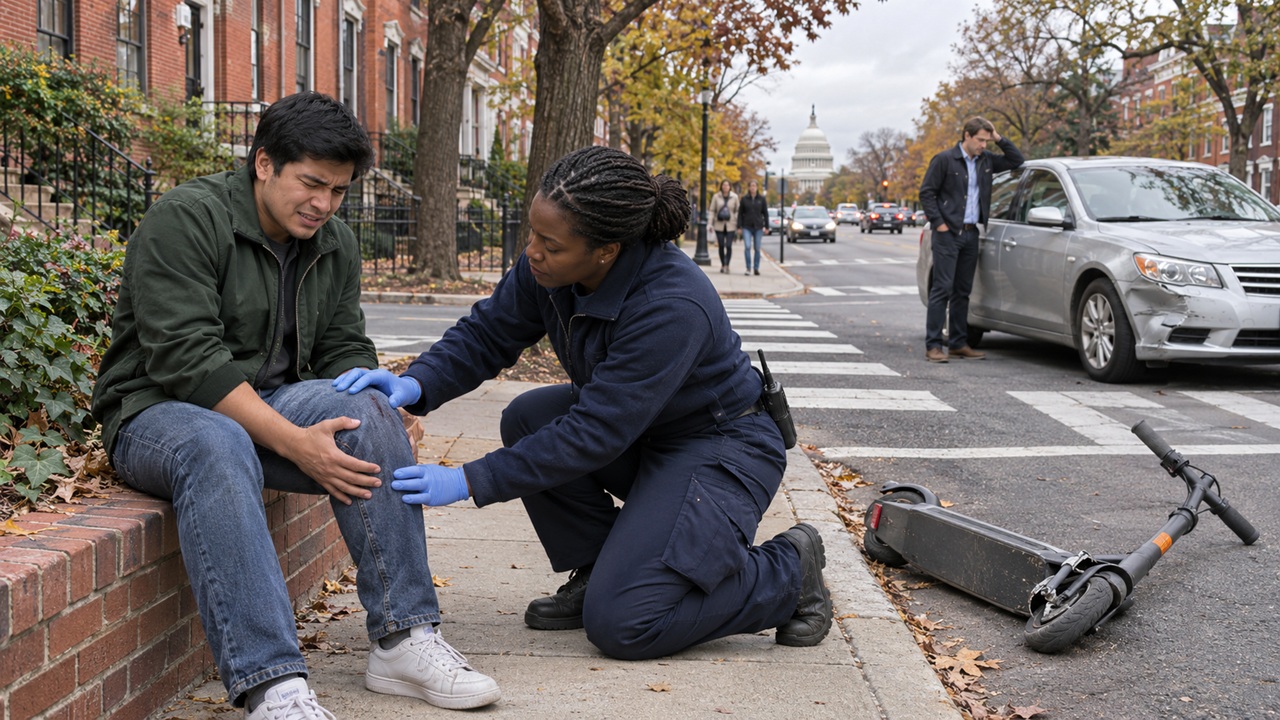
D.C. Gives Scooter Riders More Protection Than Maryland or Virginia, and That Difference Can Decide a Claim
E-scooter crashes in Washington, D.C., and the surrounding region have become a growing safety concern. On Oct. 9, 2026, two e-scooters collided near the Eastern Market Metro station. D.C. official Talib Shakir was killed in the crash, according to FOX 5 DC. The next night, a driver struck and seriously injured an e-scooter rider in Kensington, Maryland. In July, a 9-year-old riding an e-scooter in Herndon, Virginia, was killed in a collision with a minivan.
Those three crashes happened in three different places, and that matters more than most riders realize. D.C., Maryland, and Virginia each have their own rules about fault after a crash. A rider who could recover compensation in D.C. might recover nothing just across the line in Maryland or Virginia.
Where a scooter crash happens shapes nearly every part of the claim. Our D.C. scooter accident lawyers look at where and how the crash happened, identify every party who may be responsible, and push back when an insurance company tries to blame the rider.
|
Scooter Crash Fault Rules in the DMV
|
E-Scooter Injuries Are Rising Across the Region
E-scooters have become a common sight on D.C. streets and in nearby Maryland and Virginia communities. As they've grown more popular, injuries have climbed sharply. A Consumer Product Safety Commission (CPSC) survey cited by FOX 5 found that nearly 80,000 people in the U.S. are injured riding e-scooters each year. That's up from just over 10,000 in 2017.
Riders have very little protection in a crash with a car. Dr. Joanna Cohen of Johns Hopkins Children's Center told FOX 5 that children account for about 20% of e-scooter injuries. She also noted that many riders don't wear helmets, even though scooters can be faster and heavier than regular bicycles.
When a car is involved, the injuries can be devastating. Head injuries, broken bones, spinal cord damage, and internal injuries are all common. Those injuries can lead to long hospital stays, lost income, and lasting disability.
How Drivers Cause Scooter Crashes
Many scooter crashes start with a driver who doesn't see the rider or doesn't give enough room. Drivers turning right across a bike lane can cut off a scooter rider. Drivers turning left may misjudge a rider's speed. Others pull out of driveways, alleys, or parking spaces without looking.
Dooring is another common danger in D.C. A driver or passenger who opens a car door without checking for traffic can knock a rider to the pavement. Distracted driving, speeding, and unsafe passing put riders at risk, too.
Drivers owe scooter riders the same duty of care they owe everyone else on the road. That means watching for riders, giving them enough space, and yielding when required. When a driver fails to do those things, that driver may be responsible (liable) for the rider's injuries.
D.C.'s Vulnerable User Law Protects Scooter Riders
D.C. generally follows a strict rule called contributory negligence. It can bar an injured person from recovering if they were even slightly at fault. For pedestrians and certain other road users, though, D.C. law is more forgiving. The Motor Vehicle Collision Recovery Act of 2016 created that exception, and a 2020 amendment expanded it.
Under D.C. Code Section 50-2204.51, a "vulnerable user" now includes people using electric mobility devices and personal mobility devices, which covers e-scooter riders. Section 50-2204.52 then says a vulnerable user's own negligence doesn't bar recovery unless it's greater than the combined negligence of everyone who caused the injury. For example, a rider who rolled through a stop sign may still recover against a driver who was speeding.
The law also covers crashes between two vulnerable users, not just crashes with cars. A rider hurt in a collision with another scooter or a bicyclist in D.C. may benefit from the same rule. The details of each crash still matter, so a careful review of the facts is important.
Maryland and Virginia Still Use Contributory Negligence
Maryland and Virginia haven't adopted D.C.'s more forgiving rule for scooter riders. In both states, contributory negligence still generally applies. If a rider is found even 1% at fault, the rider may be barred from recovering any compensation from the driver.
Insurance companies know this and use it aggressively. They may argue that the rider was on the sidewalk or wasn't wearing a helmet. They may also claim the rider was going too fast or riding at night without lights. Any of those arguments, if accepted, could wipe out an otherwise strong claim.
There are limited exceptions. Under the last clear chance doctrine, a rider may still recover in some cases. It applies when the driver had a final opportunity to avoid the crash and failed to take it. The Kensington and Herndon crashes happened in Maryland and Virginia, so those states' rules would govern any claims from them.
How the DMV Treats an Injured Scooter Rider's Fault
The rules that apply depend on where the crash happened. Here's a simple comparison of how fault and filing deadlines work across the region.
| Jurisdiction | Fault Rule for Scooter Riders | General Filing Deadline |
|---|---|---|
| Washington, D.C. | Rider can recover unless more at fault than all defendants combined | Three years |
| Maryland | Any fault by the rider can bar recovery | Three years |
| Virginia | Any fault by the rider can bar recovery | Two years |
These are general rules, and exceptions can apply. Claims involving government agencies, for example, often have much shorter notice deadlines. Talking with a lawyer early helps make sure no deadline is missed.
Other Parties Who May Share Responsibility
Responsibility for a scooter crash can extend beyond the driver. Rental scooter companies may share responsibility if a scooter had faulty brakes, a loose handlebar, or another maintenance problem. Manufacturers may be responsible when a defect, like a battery or brake failure, contributes to a crash.
Road conditions can play a role as well. Potholes, broken pavement, and poorly designed bike lanes can send a rider into traffic. Claims against a government agency for a dangerous road usually come with strict notice requirements and short deadlines.
The scooter itself can be important evidence. If you were riding a rental scooter, save the ride receipt, trip details, and scooter ID from the app. If you own the scooter, keep it as it is after the crash rather than repairing it right away.
How to Protect a Scooter Injury Claim From the Start
Scooter crash evidence can disappear quickly on busy city streets, and in Maryland and Virginia, the rider’s own account often ends up under a microscope. These steps protect both your health and your claim.
- Get Medical Care – Head injuries don't always show symptoms right away, and medical records document the harm.
- Call the Police – A police report records the driver's information, the scene, and any witness statements.
- Photograph the Scene – Capture the vehicles, the scooter, bike lanes, traffic signals, and any road hazards.
- Save Your App Data – Rental scooter apps record your route, speed, and the time of your ride.
- Collect Witness Information – Get names and phone numbers from anyone who saw the crash.
- Avoid the Driver's Insurance Company – Don't give statements or sign anything, and send all contact to a lawyer.
Insurance companies may try to use a rider’s own words against them, especially in Maryland and Virginia. Letting our team handle every conversation keeps those words from being twisted, and acting early helps preserve video and other evidence before it’s lost.
By Your Side Every Step of the Way
The Law Offices of Stuart L. Plotnick, LLC is now managed by Finnegan Cannon, LLC, one of the region's leading personal injury law firms. The team handling cases today represents people hurt in car, pedestrian, and bicycle crashes. It serves clients throughout Maryland, Washington, D.C., and Northern Virginia.
Our team understands how insurance companies evaluate claims and how they work to limit what they pay injured people. We know the different fault rules across the DMV and how to build a strong case under each one. Consultations are free, and you don't pay unless we recover compensation for you.
Hurt in an e-scooter crash in D.C., Maryland, or Virginia? Schedule your free case evaluation and find out where your claim stands.