
Teen Drivers and Impaired Drivers Are the Two Biggest Threats on Summer Roads, According to AAA
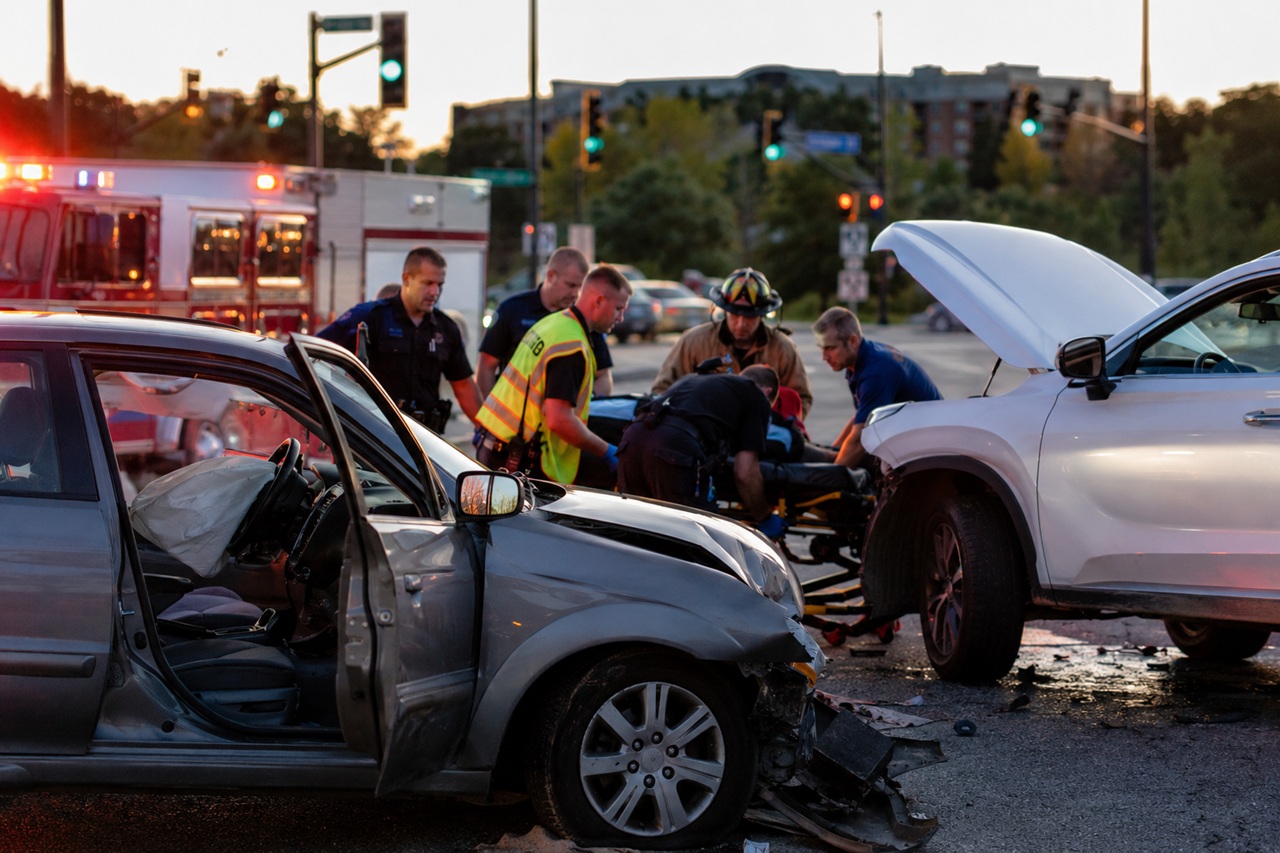
Maryland’s Summer Crash Risks Often Come Down To Teen Drivers And Impaired Drivers
Memorial Day weekend kicks off the summer travel season on Maryland roads. That often means heavier traffic, more celebrations, and a sharp uptick in serious car accidents. Across the D.C. Metro area, on I-270, I-495, and Route 355 through Montgomery County, the summer months consistently produce some of the region’s most dangerous driving conditions.
That pattern is not random. It reflects two specific forces that peak between Memorial Day and Labor Day every year, and a new national report makes clear just how deadly those forces are.
In May 2026, the American Automobile Association (AAA) released new crash data analysis urging all drivers to commit to “100 Days of Safe Driving” this summer. The findings are striking. More than 30 percent of fatal crashes involving teen drivers occur during those 100 days, and nearly one in three summertime traffic deaths involves an impaired driver. Two threats, one season, and a predictable surge in tragedy that claims hundreds of lives.
At the Law Offices of Stuart L. Plotnick, LLC, in Rockville, we have represented injured drivers, passengers, and families across Maryland, Virginia, and Washington, D.C. for decades. If you or someone you love was hurt in a crash caused by a teen driver or an impaired driver this summer, understanding your rights and acting quickly can make an enormous difference in the outcome of your case.
Why Are Summer Roads So Dangerous In Maryland?
The 100 days between Memorial Day and Labor Day represent a concentrated period of elevated risk that stands apart from the rest of the driving calendar. Schools close, families travel, and social events centered on alcohol multiply across the calendar. More cars on the road mean more opportunities for collisions, and the specific mix of drivers who fill those roads during summer shifts toward groups with statistically higher crash rates.
Maryland’s geography adds its own complications. The I-270 corridor through Rockville and Gaithersburg, the Beltway around the D.C. metro area, and Route 50 toward the Eastern Shore all carry dramatically higher traffic volumes during summer weekends. When a crash occurs at highway speeds on those routes, the injuries are often serious, and the legal questions about fault and compensation are complicated.
What Makes Teen Drivers So Dangerous During The Summer?
The numbers from AAA’s analysis are sobering. In 2024 alone, 2,636 people were killed in crashes involving a teen driver. A third of those deaths, 825 people, happened during the 100-day summer window. That concentration matters. When school lets out, teenagers gain independence, log more driving hours, and operate with far less oversight than during the school year.
Inexperience is the foundation of the risk, but it does not tell the whole story. Several interrelated factors make teen drivers disproportionately dangerous during the summer months, and understanding them matters when you’re trying to establish fault after a crash. A teen driver’s behavior behind the wheel often fits a recognizable pattern:
- Distraction From Passengers and Phones: Teens are far more likely to drive with multiple passengers their own age, and research consistently shows that each additional teenage passenger increases crash risk. Add texting and driving, and the distraction multiplies.
- Overconfidence After A Few Months Of Experience: New drivers who have been behind the wheel for six to 12 months often overestimate their abilities. They have not encountered enough unexpected situations to develop genuine hazard perception.
- Speeding and Risk-Taking on Familiar Roads: Teens frequently speed on roads they drive often, treating familiarity as a substitute for caution. On summer nights, that tendency often increases.
- Nighttime Driving Without Adequate Experience: Many graduated licensing programs restrict nighttime driving for teens during the first year. Once those restrictions lift, teens may be driving after dark far more frequently than their skills support.
- Impairment at Social Events: Summer parties and celebrations increase exposure to alcohol and drugs. A teen who has been drinking may not fully recognize how significantly their driving is affected.
Maryland’s Graduated Driver Licensing program imposes restrictions on new teen drivers because of these documented risks. When a teen driver ignores those restrictions, drives recklessly, and injures someone, their insurer may be held responsible for the harm caused. In some cases, the investigation may also examine whether a parent or vehicle owner negligently allowed an unsafe driver to use the vehicle.
Why Is Impaired Driving So Common In Summer?
The AAA data reinforces what injury attorneys in this region see every summer: impaired driving crashes cluster around holidays, weekends, and warm-weather gatherings. Nearly one in three summertime traffic fatalities involves an impaired driver, according to AAA’s crash data analysis. That means that on any given summer weekend in Maryland, a significant share of fatal crashes on state roads involve someone who should not have been driving.
The social dynamics of summer make the problem worse. Backyard gatherings, concerts, beach weekends, and holiday cookouts all often involve alcohol, and many people attend them without a plan for getting home safely. AAA, in partnership with Mothers Against Drunk Driving (MADD), urged anyone planning to drink this summer to arrange a sober ride before going out.
In Maryland and across the D.C. Metro area, impaired driving is not limited to alcohol. Marijuana, prescription medications, and other substances can all affect reaction time, judgment, and perception. An impaired driver may have passed a sobriety test or simply not been tested at all, but toxicology results, witness accounts, and the circumstances of the crash itself can all be used to build a civil case for compensation even when criminal charges were not filed.
Crashes caused by drunk drivers often involve complicated legal issues, including disputed test results, criminal proceedings, and insurance companies looking for ways to reduce what they pay.
Common Injuries In Crashes Caused By Teen Or Impaired Drivers
Crashes involving teen drivers and impaired drivers tend to produce serious injuries because both types of drivers may fail to brake or take evasive action before impact. The absence of a last-second reaction means the full force of the collision is absorbed by the vehicles and the people inside them. For example, a rear-end collision at 45 miles per hour by a driver who never touched the brakes delivers far more force than the same collision at 20 miles per hour by a driver who slowed before impact.
The injuries most commonly seen in these crashes include the following, and each carries its own set of long-term medical and financial consequences:
- Traumatic Brain Injuries: Concussions and more severe brain injuries can result from any collision with significant force. Symptoms are not always immediate, and victims sometimes dismiss early warning signs without understanding their significance.
- Spinal Cord And Neck Injuries: Whiplash is among the most common outcomes of rear-end and side-impact crashes. More severe spinal injuries can result in partial or permanent disability.
- Broken Bones And Orthopedic Injuries: Fractures to the arms, legs, hips, ribs, and collarbones are common in high-speed impacts and often require surgery and extended rehabilitation.
- Internal Injuries: Organ damage and internal bleeding are not always visible or immediately symptomatic, which makes prompt medical evaluation after any serious crash critical.
- Psychological Trauma: Post-traumatic stress disorder, anxiety, and depression are recognized consequences of serious car accidents and may be part of a Maryland personal injury claim.
One of the most important things an injured person can do after any serious crash is see a doctor immediately, even if they feel mostly fine. Delayed-onset injuries are common in car accidents, and a gap in medical treatment creates an opening for insurance companies to argue that the injuries were not caused by the crash.
What Compensation Can A Maryland Car Accident Victim Recover?
When a negligent or impaired teen driver causes a crash in Maryland, the injured person has the right to seek financial recovery for the full impact of the crash. That goes beyond emergency room bills. A serious crash reshapes a person’s life in ways that can extend for months or years, and the compensation available under Maryland law for car accidents is designed to reflect that full scope.
Maryland car accident victims can typically pursue recovery for medical expenses, future medical care, lost wages, reduced earning capacity, pain and suffering, emotional distress, and property damage, including vehicle repair or replacement. In cases involving a drunk or drugged driver, punitive compensation may also be available to hold that driver accountable for particularly reckless behavior.
One important feature of Maryland law is worth understanding before speaking with any insurance adjuster: Maryland follows the contributory negligence rule, one of the strictest standards in the country. If an insurance company can establish that the injured person was even one percent responsible for the crash, that person may be barred from recovering compensation. This is one of the central reasons why legal representation matters from the very beginning of the claims process.
How Do I Prove A Teen Or Drunk Driver Caused My Crash?
Proving fault after a crash with a teen driver or an impaired driver involves more than pointing to the police report. Maryland’s contributory negligence rule means the other side will actively look for any behavior by the injured person that could be used to shift or share blame. Building a case that withstands that scrutiny requires evidence gathered quickly, before it disappears, and an attorney who knows what to ask for and where to find it.
The types of evidence that most effectively establish fault in these cases include the following, and each category serves a distinct purpose in building the overall picture of what happened:
- The Police Report and Officer Observations: If the responding officer noted the at-fault driver’s age, observed signs of impairment, administered a field sobriety test, or noted erratic driving behavior in the report, those observations carry significant weight. The report also captures road conditions, lighting, and the positions of the vehicles at the scene.
- Toxicology Results and Blood Alcohol Records: A positive blood alcohol test or toxicology result from the at-fault driver is powerful civil evidence, even if criminal charges were reduced or dropped. An attorney can seek these records and use them to establish that the driver’s impairment was a direct cause of the crash.
- Cell Phone Records and Data: In crashes involving teen drivers, cell phone records can show whether the driver was texting, using an app, or talking at the moment of impact. Carriers maintain timestamp records, and a formal legal request can access them before they are deleted or become harder to obtain.
- Surveillance and Traffic Camera Footage: Intersections, parking lots, businesses, and residential buildings along busy Maryland corridors often have cameras that capture the moments before, during, and after a crash. Footage may be overwritten quickly, making early legal action critical to preserving it.
- Witness Accounts and Accident Reconstruction: Independent witnesses who saw the crash or the at-fault driver’s behavior in the moments before it can corroborate the injured person’s account. In complex cases, accident reconstruction professionals analyze vehicle damage, skid marks, and impact angles to establish speed and point of fault with precision.
Drivers, passengers, and families should also understand what to do after a car accident because early steps can affect medical documentation, evidence preservation, and the strength of the claim.
Why Insurance Companies Fight These Claims
Even when a teen driver or impaired driver clearly caused the crash, the insurance company may not treat the claim fairly. Adjusters may argue that the injured person was speeding, distracted, failed to react in time, delayed medical treatment, or had a pre-existing condition that explains their symptoms.
Because insurance companies and car accident cases often turn into a fight over fault, damages, and medical proof, every statement matters. Giving a recorded statement without legal guidance can create problems if an adjuster later uses your words out of context.
This is especially important in cases involving passenger injuries, multi-vehicle collisions, or crashes involving uninsured or underinsured drivers, where multiple insurance policies may be involved.
How Can A Rockville Car Accident Attorney Help Me?
AAA’s warning about the 100-day summer driving season is not abstract. It reflects a documented pattern of preventable crashes that injure and kill real people on real roads in Maryland every summer. When one of those crashes is caused by a teen driver or an impaired driver, the legal path to full compensation is not always straightforward, and the insurance companies that represent those drivers are experienced at making it harder.
The Law Offices of Stuart L. Plotnick, LLC has spent decades representing crash victims across Rockville, Bethesda, Montgomery County, and the broader D.C. Metro area.
Our case results speak for themselves, including a $300,000 award for an 85-year-old client who was rear-ended at a stoplight in Bethesda, a case the insurance company tried to minimize by pointing to a prior back injury. We pushed back, filed suit, and secured the full award. We take the same aggressive approach to every case.
There are no upfront costs and no legal fees unless we win your case. If you were hurt in a summer crash caused by a teen driver or impaired driver anywhere in Maryland, Virginia, or Washington, D.C., contact our law firm today to schedule your free case evaluation.
"Stuart and Jackie helped me greatly after a serious accident where I was hit by a car while on my motorcycle and broke my foot. From the day of my motorcycle accident, and over the last two years, they handled everything from hospital and therapy bill payments to getting my motorcycle properly repaired, and finally coming to a fair and good settlement of my case with insurance companies. If in the future I ever need any assistance in a motor vehicle or other accident, I'll definitely call them first. I highly recommend anyone in need of an accident attorney to give Stuart Plotnick a call. It will be the best decision you could possibly make. I thank them for everything they did for me. Thanks again." - Ron, ⭐⭐⭐⭐⭐