
How Common Is Road Rage in the U.S.?
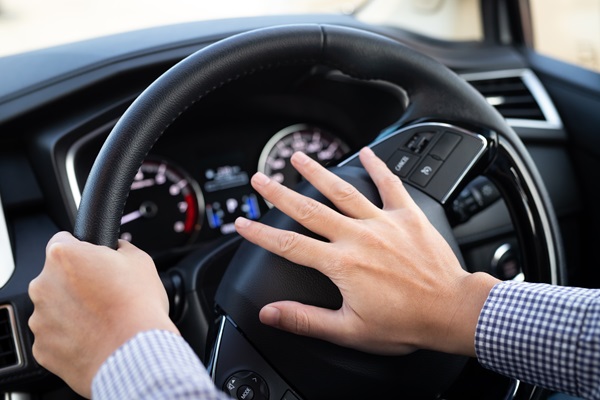
We've all been there. Someone cuts you off without signaling, or they're going 15 miles under the speed limit in the passing lane. Your hands tighten on the steering wheel, your jaw clenches, and suddenly you're not feeling very Zen anymore.
Turns out, you're not alone. A recent survey from the AAA Foundation for Traffic Safety reveals something pretty eye-opening about how we behave behind the wheel. The number of road rage incidents that can lead to car accidents might surprise you.
How many drivers actually admit to aggressive driving?
According to AAA's research, 96% of drivers reported engaging in at least one aggressive driving behavior in the past year. That's basically everyone. When almost every driver on the road admits to becoming aggressive, it stops being an isolated problem and becomes a cultural issue.
But what counts as aggressive driving? We're talking about things such as tailgating, honking angrily, making rude gestures, cutting people off on purpose, or trying to block someone from changing lanes. These might seem like minor annoyances in the moment, but they're actually dangerous behaviors that can escalate quickly.
What about the really dangerous road rage?
This is where it gets truly concerning. The survey found that more than 10% of drivers admitted to engaging in seriously violent behaviors behind the wheel. We're not just talking about honking anymore.
Some drivers reported following another vehicle to confront the driver. Others got out of their cars to confront someone in person. Some even admitted to throwing objects at other vehicles, attempting to run someone off the road, or physically threatening another driver.
Think about that for a second. One in ten drivers has done something that could've resulted in serious injury or death. These aren't just hotheads having a bad day; these are regular people who, in the moment, felt justified enough to do something truly dangerous.
Why do people get so aggressive on the road?
According to the study, people's motivations for aggressive driving vary. Some folks are in a rush and feel like they need to get somewhere right now. Others genuinely feel that another driver's behavior poses a threat to their safety. There's also the control factor; when everything feels chaotic on the road, some drivers try to assert control by being aggressive.
Then you've got the self-appointed driving instructors who think they need to "teach" other drivers a lesson. Plus, there's plain old revenge; someone cut you off, so now you're going to cut them off right back.
David Yang from the AAA Foundation for Traffic Safety made an important point about this. He noted that aggressive driving often becomes a cycle. When the local driving culture is aggressive, people respond with even more aggression, creating a feedback loop. Breaking that cycle requires changing the culture itself, not just individual behaviors.
How often do road rage incidents turn violent?
The statistics here are pretty sobering. The survey found that 20% of respondents personally know someone who was threatened with a weapon during a road rage incident. That's one in five people.
Even worse, 12% of drivers know someone who was either injured or killed as a result of road rage. Let that sink in. We're not talking about abstract statistics; these are people who have seen firsthand what can happen when aggressive driving spirals out of control.
These numbers tell us that road rage isn't some rare occurrence we see on the news. It's happening all around us, and it's affecting people we know. The person tailgating you might be having the worst day of their life, but that doesn't make it okay to put other people at risk.
What can you do to avoid or control road rage?
AAA offers some pretty straightforward advice for dealing with aggressive drivers and keeping yourself from becoming one:
- Don't engage: First and foremost, stay calm. If someone's being aggressive toward you, don't make eye contact and definitely don't gesture back. Nothing good comes from engaging with an angry driver.
- Give other drivers space: If someone's tailgating you or driving aggressively around you, let them pass. Your ego isn't worth a crash or a confrontation.
- Get help if you're confronted: If you feel genuinely threatened, don't go home. Head to a police station or a busy public place and call 911. Don't try to confront someone who's following you.
- Calm down: To control your own road rage, AAA suggests taking a few deep breaths before reacting. That split second of pause can make all the difference between a close call and a dangerous situation.
- Have a Plan: Leave early enough that you're not stressed about being late. When you're not in a rush, you're way less likely to get frustrated by other drivers doing things that annoy you.
Need legal help after a road rage accident?
If you've been injured in a car accident caused by an aggressive or reckless driver, the Law Offices of Stuart L. Plotnick, LLC is here to help. With three decades of experience fighting for accident victims throughout Maryland, Virginia, and Washington D.C., our legal team understands what it takes to hold dangerous drivers accountable and secure the compensation you deserve.
As a law firm founded by a former insurance company attorney, we bring an insider's perspective to every case. We know the tactics insurance companies use to reduce compensation, and we have the skills to counter them effectively. Whether you're dealing with medical bills, lost wages, or long-term injuries from a road rage incident, we'll work tirelessly to protect your rights and get you the financial recovery you need.
Don't let an aggressive driver's actions impact your life without consequences. Contact us today for a free consultation. We serve clients throughout the D.C. Metro area and work on a contingency-fee basis, meaning you pay nothing unless we win your case.
"So satisfied with the outcome of my case. I will forever be grateful to Mr. Plotnick." - Dimar, ⭐⭐⭐⭐⭐